
Walk a Pooler Street Directory from Address to Evidence
The best starting clue is the situs address, meaning the physical location of the parcel. A Pooler address can identify an assessed owner, but ownership is not the same as occupancy. Build the street-by-street picture in layers, and keep the parcel identification number, or PIN, beside every note so an old spelling or postal change does not split one property into two false histories.
- Enter the address in SAGIS and confirm the parcel outline, PIN, municipality, subdivision, lot, and district layers.
- Open the Chatham Board of Assessors card and copy the owner, situs address, tax mailing address, legal description, sale reference, and exemption clues.
- Use the current owner and deed book and page in the GSCCCA real-estate index, then follow grantors and grantees through earlier transfers.
- For voter evidence, remember that My Voter Page is a private self-lookup. A sortable county file must be ordered under Georgia rules.
- For earlier occupants, consult Savannah and Chatham reverse listings, census schedules, newspapers, and probate material.
This order prevents a common mistake: treating the name on a tax notice as proof of who sleeps at the property. It also gives the street directory a durable spine when wording changes.
Search Pooler Streets with SAGIS Address, Name, and PIN Tools
Savannah Area Geographic Information System Viewer 2.1 is the visual workbench for a Pooler street directory. Its consolidated search accepts an address, owner name, or PIN. A map click opens a property report and intersecting planning features. A right click offers property-report and mailing-label actions, while parcel and district layers show how lots meet. The viewer is for context, not a survey or title opinion, and directs ownership and valuation questions to the assessor.
| SAGIS control | How it works | Street result |
|---|---|---|
| Address, Name or PIN | Enter one known clue | Candidate parcel and report |
| Map click | Select a parcel | Property and planning details |
| Right click | Choose report or mailing labels | Selected-location output |
| Layers and Legend | Show parcels and districts | Boundary context |
| Select, Measure, Print | Work across nearby parcels | A reproducible block view |
The 2026 Parcel Digest includes component address fields, owner and mailing fields, municipality, neighborhood code, values, acreage, year built, sale data, legal description, and deed book and page. That depth makes a PIN more reliable than loose text.
The official Chatham parcel data service documents the source behind this street-level work.
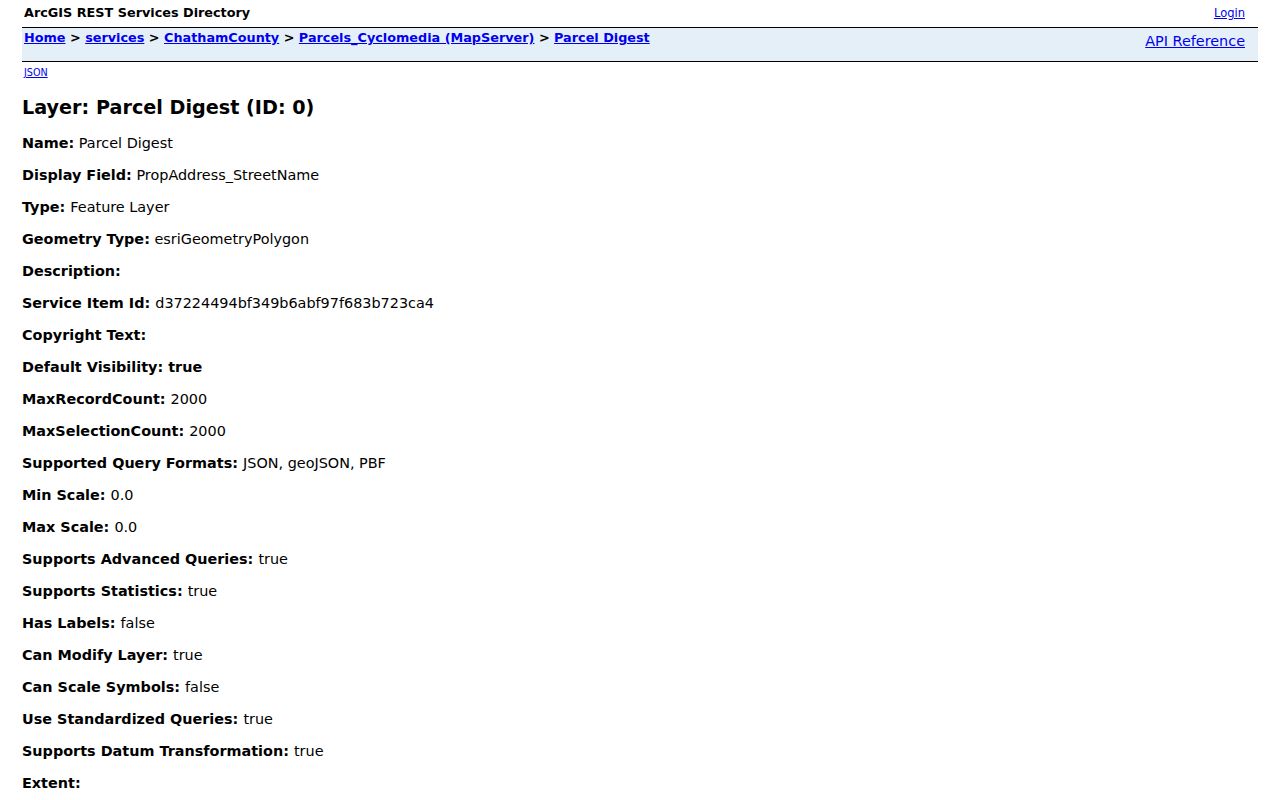
Use those fields to preserve parcel identity, then verify the official tax card and deed separately.
Pooler Street Directory Clues: Situs, Parcel, and Plat
Several similar terms answer different questions. Keeping them apart makes results honest and easier to compare across Pooler systems.
- Parcel or PIN
- The assessor's durable identifier for a mapped tract. It can survive a postal wording change.
- Situs address
- The physical parcel location, distinct from the place where a tax notice is mailed.
- Plat
- A recorded map that identifies a subdivision, lots, boundaries, streets, and easements.
- Criss-cross directory
- A directory arranged by street and house number, useful for finding listed occupants in a covered edition.
An out-of-town owner mailing address often says only where the bill goes. A homestead flag may support owner occupancy, but it does not name every person in the household. A plat identifies land, not residents.
Address-Keyed Records Behind the Pooler Street Directory
Pooler's records are divided among city, county, regional, and state systems. The parcel number links map and tax data to deeds and plats. The written address links city permits and code files. Names then lead into directory, census, voter, newspaper, and probate evidence.
| Address source | Official keeper | Evidence available | Access route |
|---|---|---|---|
| Property card | Chatham Board of Assessors | Owner, situs, mailing, PIN, values, exemptions | Free online search |
| Parcel map | SAGIS | Geometry, adjacent lots, municipality, districts | Free viewer |
| Deeds and plats | Chatham Clerk | Parties, recording data, book/page, title chain | GSCCCA and clerk |
| Voter file | Georgia SOS | Permitted residence fields and districts | Ordered under state law |
| Permits and code | City of Pooler | Project, applicant, work, inspection, case dates | CivicGov or request |
| Reverse directory | Libraries and archives | Listed adults by street in covered years | Digital or onsite |
Do not flatten these into one claim. A deed shows a transfer, a tax card reports assessment data, and a directory reflects what its publisher gathered.
Read the Chatham Tax Card Before Naming a Pooler Resident
The assessor search supports owner name, property address, and PIN as practical keys, though the exact live qPublic labels and match behavior were not verified. A result can show owner, mailing and physical addresses, legal description, map reference, values, building traits, deed references, and exemptions.
This is a useful first identity check in a street directory, but it is an ownership record. One person may hold title through an entity. Another may receive the tax bill. Other adults may occupy the home without appearing. Keep owner, mailing addressee, and resident separate.
Practical note. Copy the PIN and legal description before changing portals because they outlast many address-format variations.
Move from a Pooler Street Owner to the Recorded Deed
The Chatham Clerk's Real Estate Recording Division is the legal-record stop after the assessor. Search the current owner as grantee in the GSCCCA index, inspect the purchase instrument, and record seller, dates, instrument type, and book and page. Then search the prior seller as grantee. The exact earliest online year is not stated, so an empty electronic result does not prove no record exists.
The official Georgia real-estate index illustrates the instrument search.
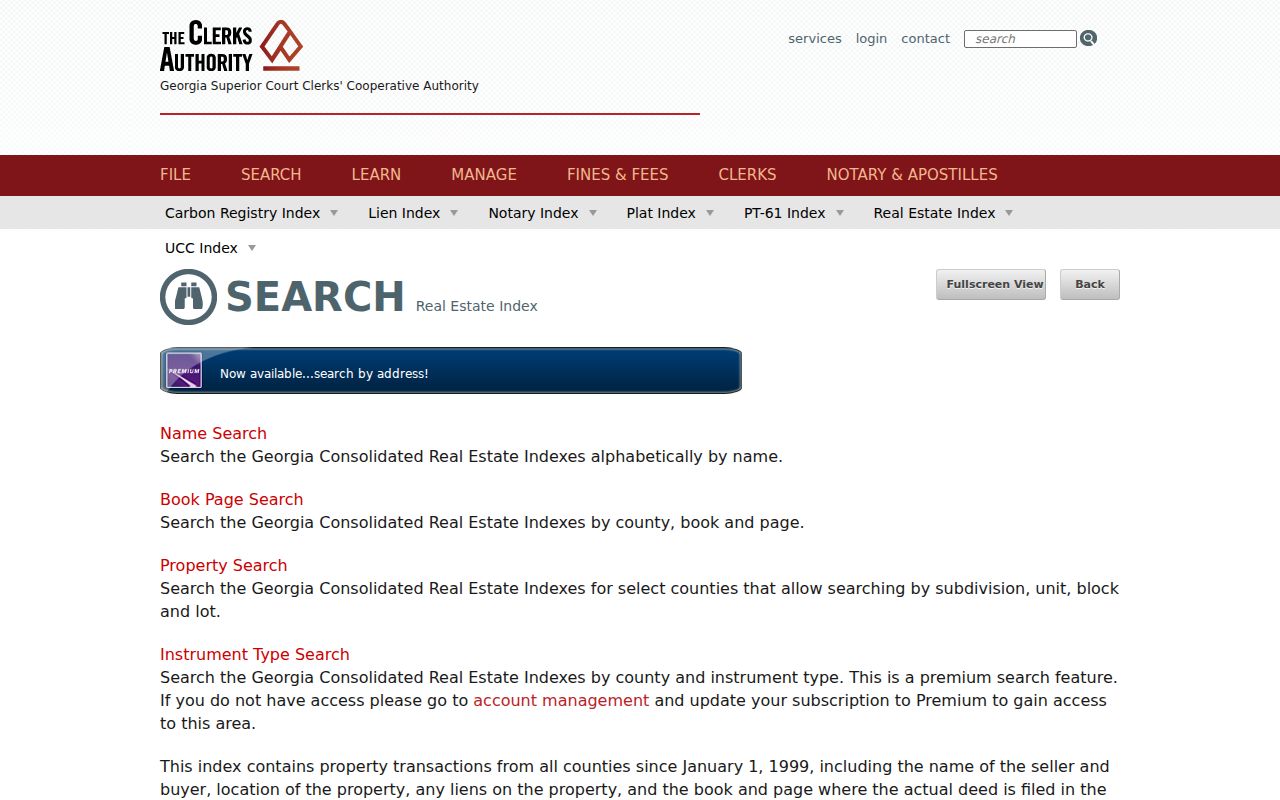
For an older chain, carry exact names and book/page references to the Garden City Records Center, where deed books, plats, maps, microfilm, terminals, scanners, and printers continue the trail.
The clerk's deed search guidance explains free in-office searching and copy procedures.
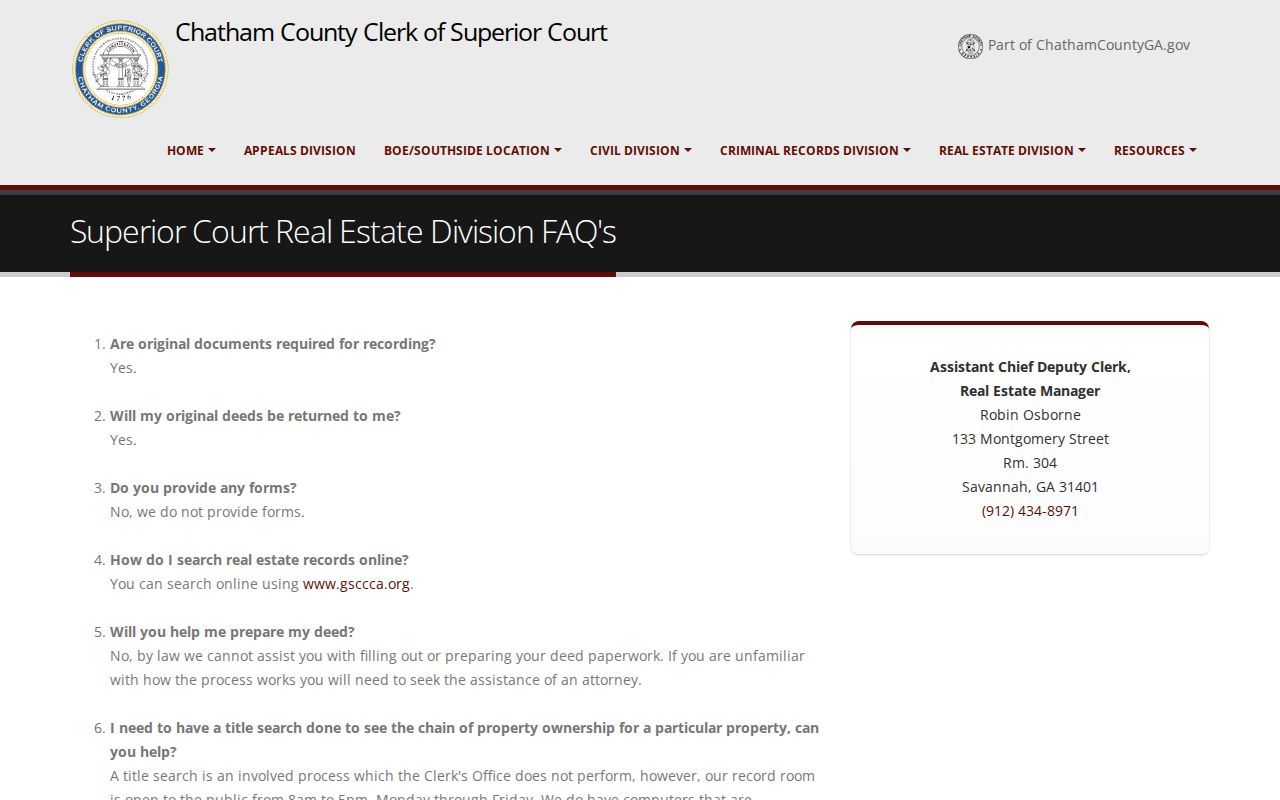
The FAQ lists copies at fifty cents per page; confirm certified or special-copy charges before ordering.
Pooler Postal Labels Do Not Draw the Street Directory Boundary
Postal Pooler, incorporated Pooler, and a Chatham parcel are three different geographies. Rapid annexation and proximity to Savannah, Garden City, and Bloomingdale make this practical. A Pooler last line does not prove city jurisdiction. Confirm the SAGIS municipality layer, USPS city and ZIP, and Chatham PIN.
In 2015, USPS reassigned 2,660 deliveries from Pooler 31322 to Savannah 31407. A deed or permit on each side of that shift may describe one parcel with a different postal city or ZIP. Search both forms, then anchor the match with PIN, subdivision, lot, and legal description.
Add Pooler Permit and Code Files to a Street Timeline
City files can date work after parcel and deed research establishes the land. Pooler's CivicGov portal advertises building and planning applications, inspection requests, complaints, and invoice payment behind an account gate. Research did not verify a public permit-history index or start year. If the portal does not expose a file, request existing records by address, permit or case number, department, subject, and date range.
The Pooler permit portal shows the account-based entry points.
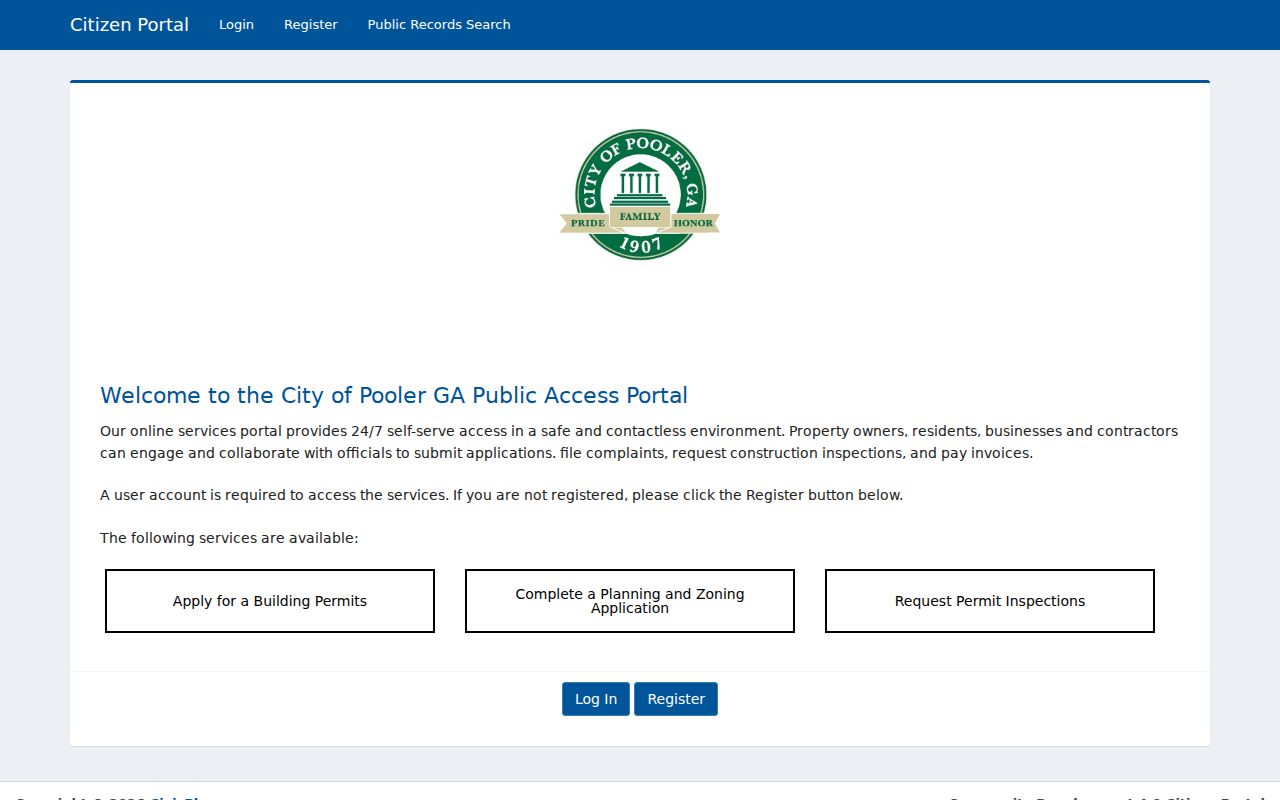
A permit may show applicant, contractor, work, inspection, and project date. It cannot prove the named applicant lived there.
Use Pooler Reverse Listings for Earlier Street Residents
Historical occupant work shifts to regional directories. Pooler often appears in Savannah and Chatham books rather than a stand-alone run. The Savannah street index begins in 1889, while verified Pooler-inclusive Polk editions include 1951, 1954, 1955, 1957, 1959, 1961, 1962, and 1963-64.
Read the address section for listed adults, then the alphabetical entry for spouse, occupation, and abbreviations. Omission does not prove absence. Minors, lodgers, newcomers, and rural households were unevenly covered. The Pooler directory-book guide covers the collections themselves.
Georgia Voter Records Are Not a Pooler Street Browser
My Voter Page requires a first initial, last name, county, and date of birth. It is an authenticated self-lookup, not a browse-by-street tool. State voter-list products can include component residence addresses, city and ZIP, municipality, districts, status, and birth year, while withholding full birth dates, Social Security and driver-license numbers, and Safe at Home data.
Ordered files remain subject to O.C.G.A. §§21-2-225 and 21-2-234 and current permitted-use terms. A voter record covers registered voters only. It cannot provide a full household, and primary participation does not reveal ballot choices.
Privacy Limits of a Pooler Street Directory
No official Pooler street directory lists everyone behind each door. Property records omit nonowners. Directories omit people publishers missed. Voter data excludes unregistered residents and protects designated information. DMV residence information is restricted, and utility details are not a public household roll.
Georgia records may redact sensitive identifiers and protected contact information. Safe at Home gives qualifying survivors a substitute address, so a public mailing address may intentionally not identify a residence. Treat gaps as limits, not invitations to guess.
Lawful use. Use Pooler address records for personal history and civic research; stalking, threats, surveillance, or harassment can violate Georgia law.