
Start a Pooler Residents Search
The best starting point depends on what is known. An address points to the Chatham County property roll and SAGIS parcel map. A name can be checked against ownership, recorded deeds, court parties, business filings, and licensed occupations. An older address belongs in regional directories, census schedules, deeds, and probate files. No single roll lists every Pooler resident. Renters, children, recent arrivals, and people whose addresses are protected may not appear in an open index.
Keep each result in its proper role. The assessor identifies the taxpayer and parcel, while the clerk's deed is the legal title record. A court index shows that a person was named in a case, not what the final facts were. Georgia My Voter Page is an identity-based self-service search, not a public street browser.
- Search the Chatham assessor by owner, property address, or parcel identifier.
- Use SAGIS to confirm the parcel, municipality, and nearby geography.
- Carry the owner's name and deed reference into the clerk or GSCCCA index.
- Check the proper court, probate, vital, business, or license source for the question.
- Request an existing city or county record when no public portal provides it.
Pooler Resident Record Keepers
Pooler is not the Chatham County seat and has no separate deed recorder or assessor. That division matters. The county Board of Assessors maintains tax ownership, the Clerk of Superior Court records deeds and many court files, and the Board of Registrars handles voter records. Pooler's own clerk keeps municipal material such as council records, permits, and code files. The Pooler street directory workflow explains how those sources connect by address.
Chatham Board of Assessors
222 W. Oglethorpe Avenue
Savannah, GA 31401
912-652-7271
Pooler Parcels Start in SAGIS
SAGIS is the most useful map view when the search begins with a Pooler address. Its consolidated search accepts an address, owner name, or PIN, which is the parcel identification number. Clicking a parcel opens a property report and shows intersecting planning features. The assessor card remains the authority for ownership and value, while the map supplies boundary and location context.
| Search control | Input | Use |
|---|---|---|
| Address, Name or PIN | Text or autocomplete | Find a specific parcel |
| Map click | Parcel selection | Open the property report |
| Layers and legend | Map choices | Check city and district lines |
| Right click | Map interaction | Open reports or mailing labels |
The Chatham assessor gateway screenshot shows the county entry point used to move from a mapped parcel to the official tax record.
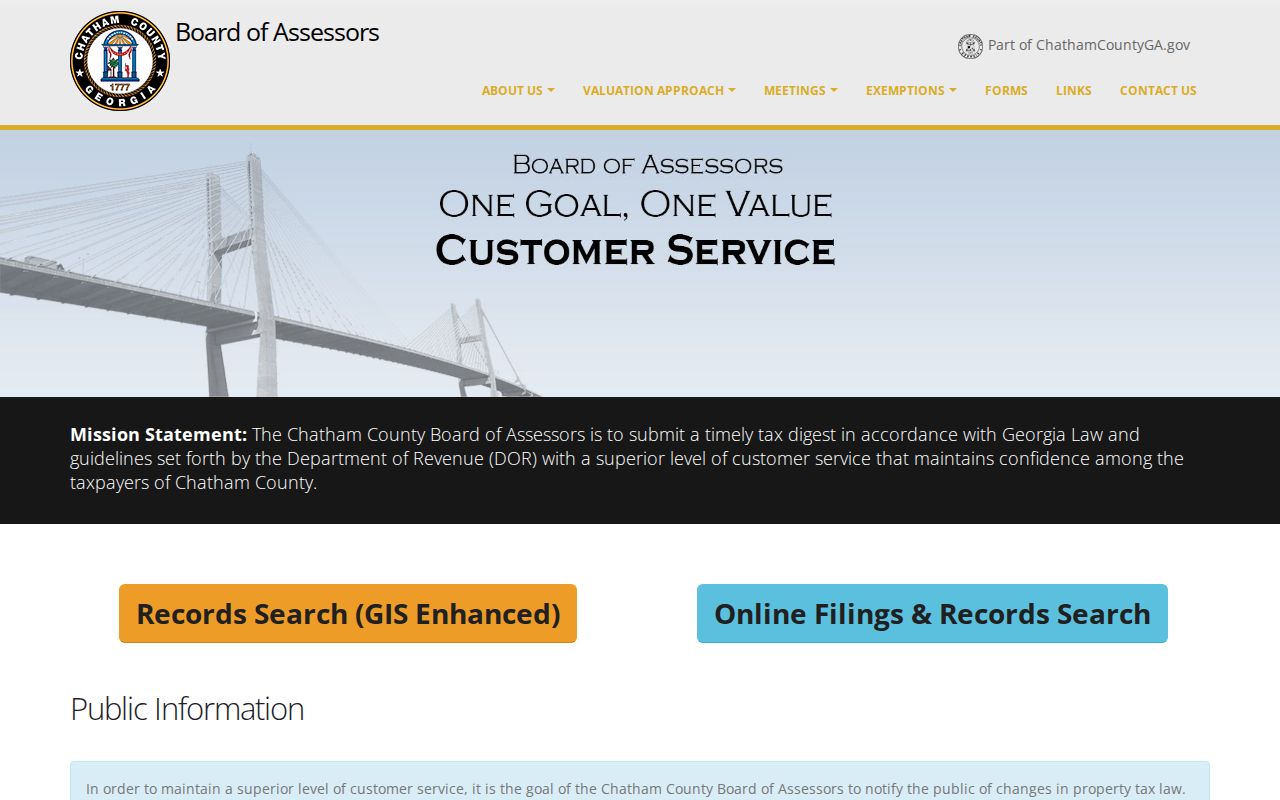
The card can separate the situs address, where the parcel sits, from the mailing address used for tax notices. Neither field alone proves who sleeps at the address.
Current Pooler Resident Sources
Several official sources act like narrow directories. They differ in who appears and why. For a sound Pooler residents directory search, use the source that records the relevant event, then compare names, dates, addresses, and identifiers across a second source.
| Official source | People represented | Useful evidence | Access |
|---|---|---|---|
| Property roll | Parcel owners | Situs, mailing address, PIN, deed cues | Free online |
| Deed index | Grantors and grantees | Instrument, date, book and page | Online and record center |
| Court party search | Named case parties | Case, role, filing, docket | Public categories online |
| My Voter Page | The authenticated voter | Status, districts, polling place | Identity fields required |
| City records | Applicants and named parties | Permits, cases, council records | Portal or request |
The city's department directory identifies the right municipal custodian and direct lines for records, permits, code enforcement, police reports, taxes, and cemetery administration.
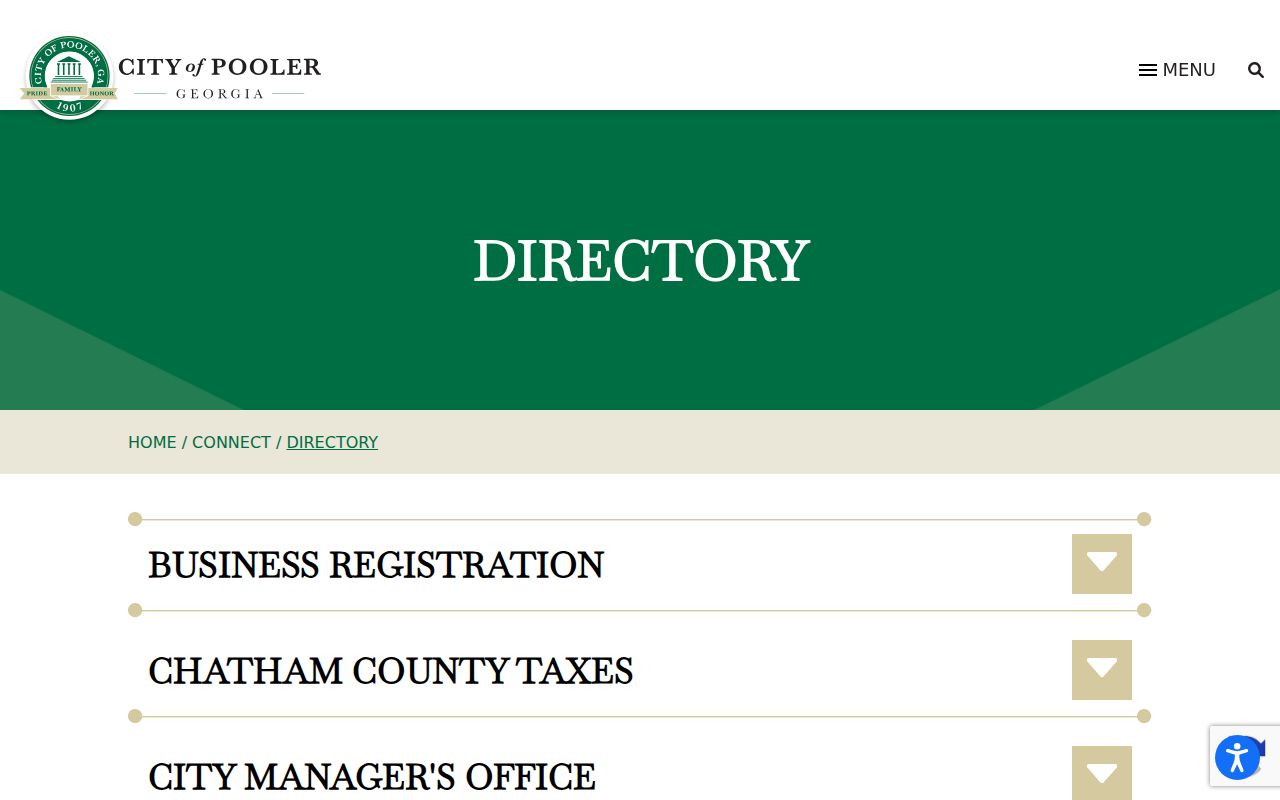
That directory lists public staff contacts. It is not a household roll and should not be treated as one.
Pooler Deeds Link Names
Real-estate records tie a name to a recorded transaction. Search the buyer as grantee, the party receiving an interest, and the seller as grantor, the party conveying it. Results may show instrument type, recording date, book and page, legal description, and image access. The current owner's assessor card often supplies the first deed clue.
The Chatham real-estate FAQ explains the free in-office search and current copy channel.
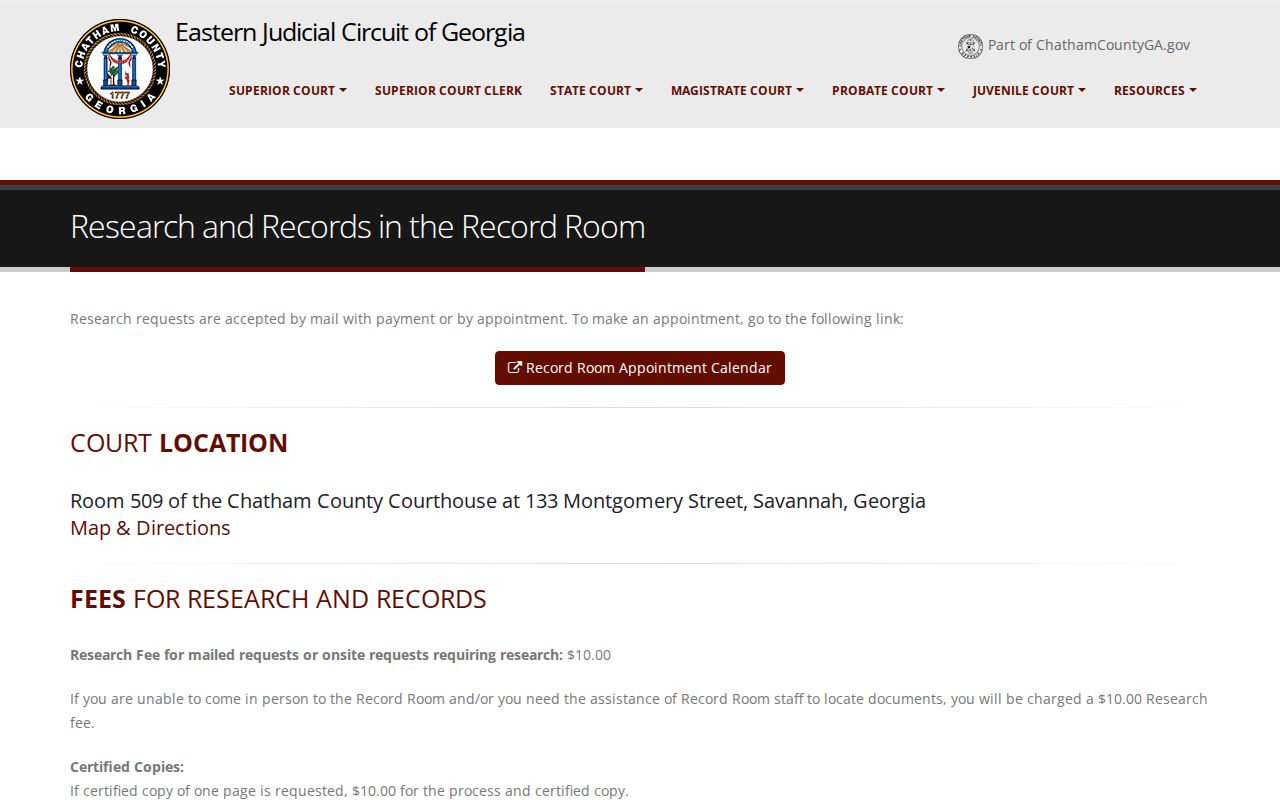
Older deed books, plats, maps, and microfilm continue at the Garden City Records Center when the online trail ends.
Pooler Court Names Need Proof
Chatham civil and other participating public case categories can be searched through re:SearchGA by court location, case number, party or business name, filing dates, and case type. A docket is the running list of filings and events in a case. It does not by itself identify two same-name people as one person.
The re:SearchGA citizen portal is the county clerk's online path for recent material.
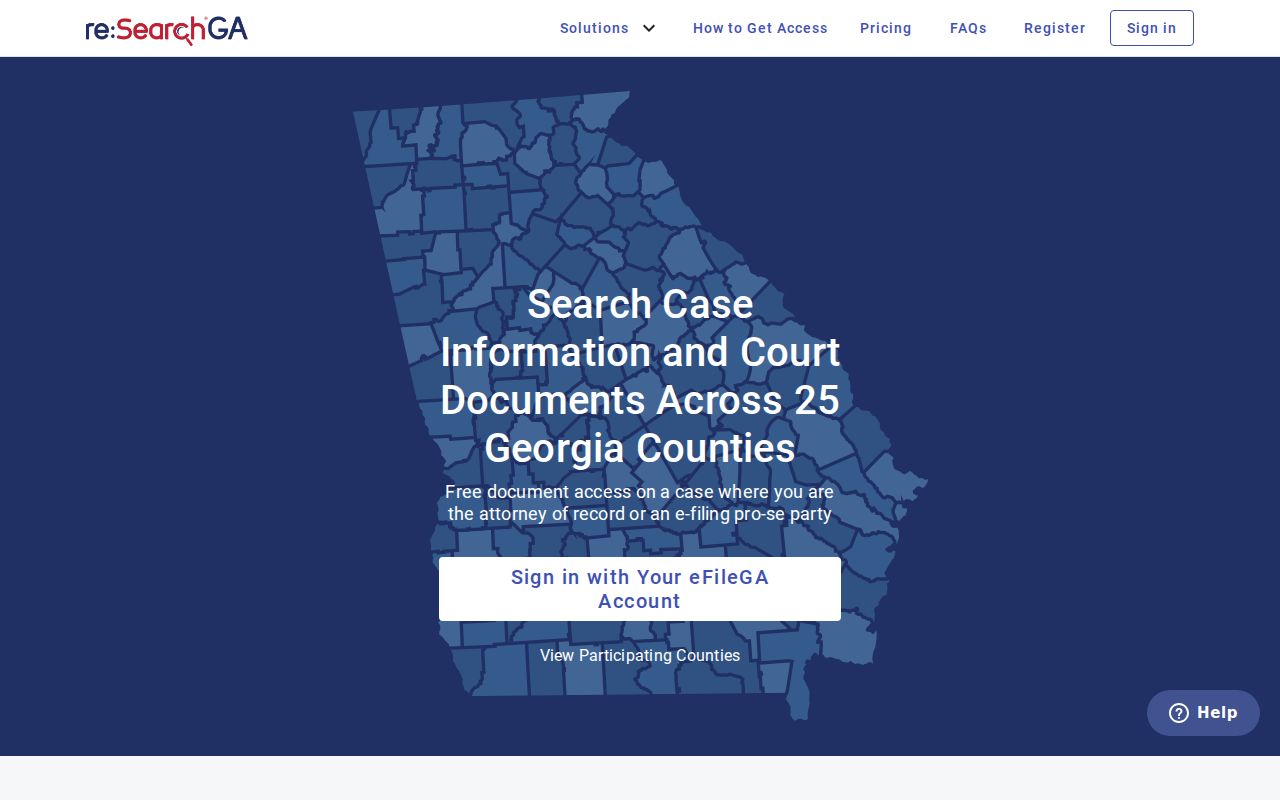
Compare the middle initial, party role, filing date, address-linked property, and business filings before accepting a match. Sealed and protected records do not appear publicly.
Pooler Voter Records Are Limited
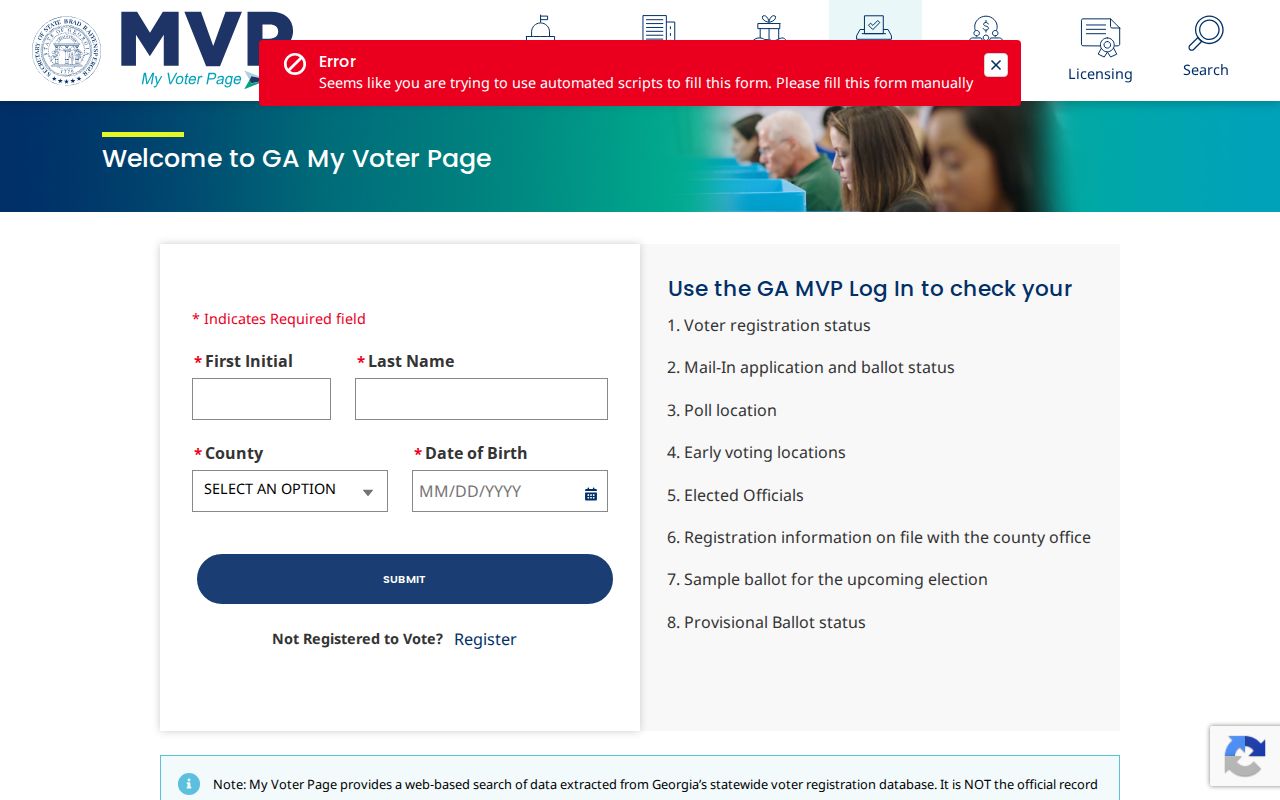
Georgia My Voter Page asks for a first initial, last name, county, and date of birth. A match can return registration status, district and polling information, sample ballots, and absentee status. It is built for the voter to check a registration, not for open browsing of Pooler residents by block.
The official My Voter Page form shows why a known identity is required.
Georgia also sells voter-list products under state law, but protected data is withheld and statutory use limits apply. Voting history records participation, never ballot choices.
Pooler Vital Records Split Custody
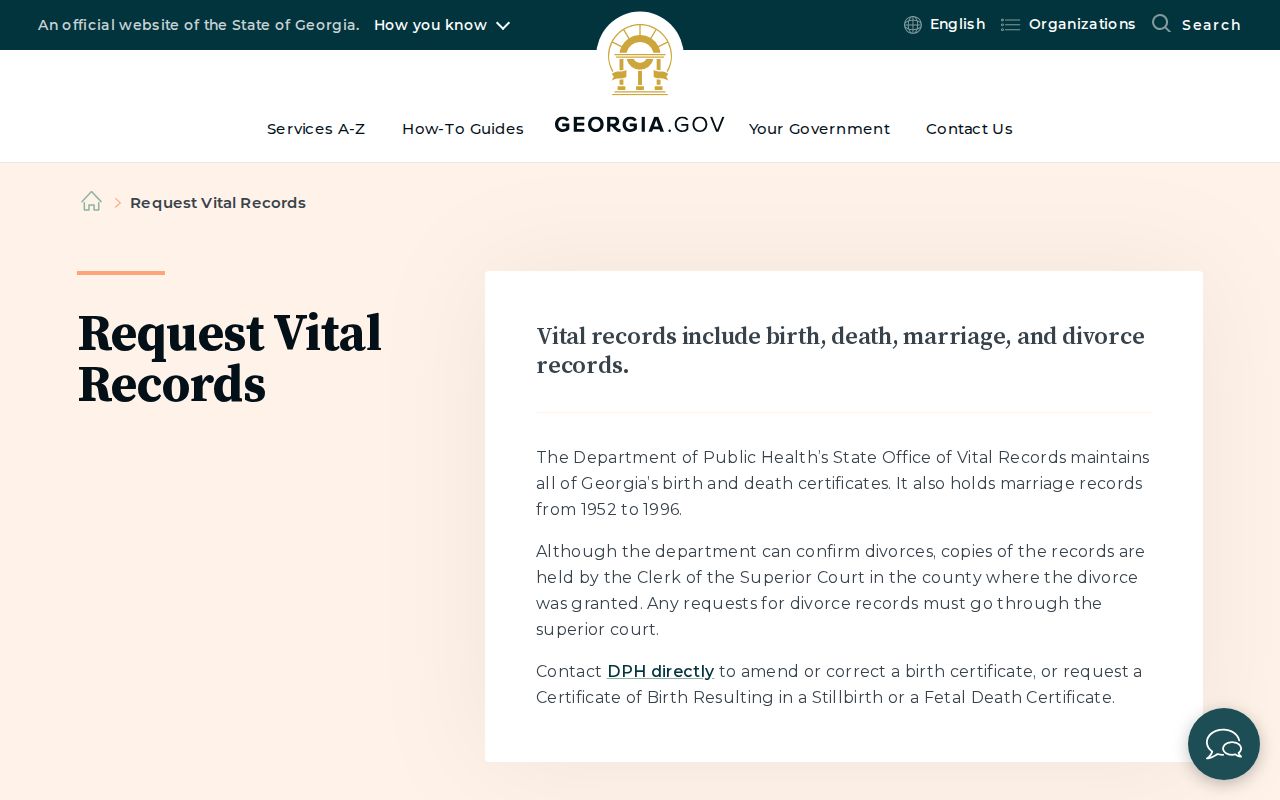
Birth and death certificates route through the Chatham County Health Department or Georgia public health office. Chatham Probate Court keeps county marriage material, while the state maintains marriage records for 1952 through 1996. Divorce decrees come from Superior Court, and the state provides verification.
The Georgia vital-record request page sets out identity, relationship, fee, and ordering rules.
Birth certificates remain controlled records. Historical access differs, and a recent certificate order is not an open resident lookup.
Pooler Requests Fill Portal Gaps
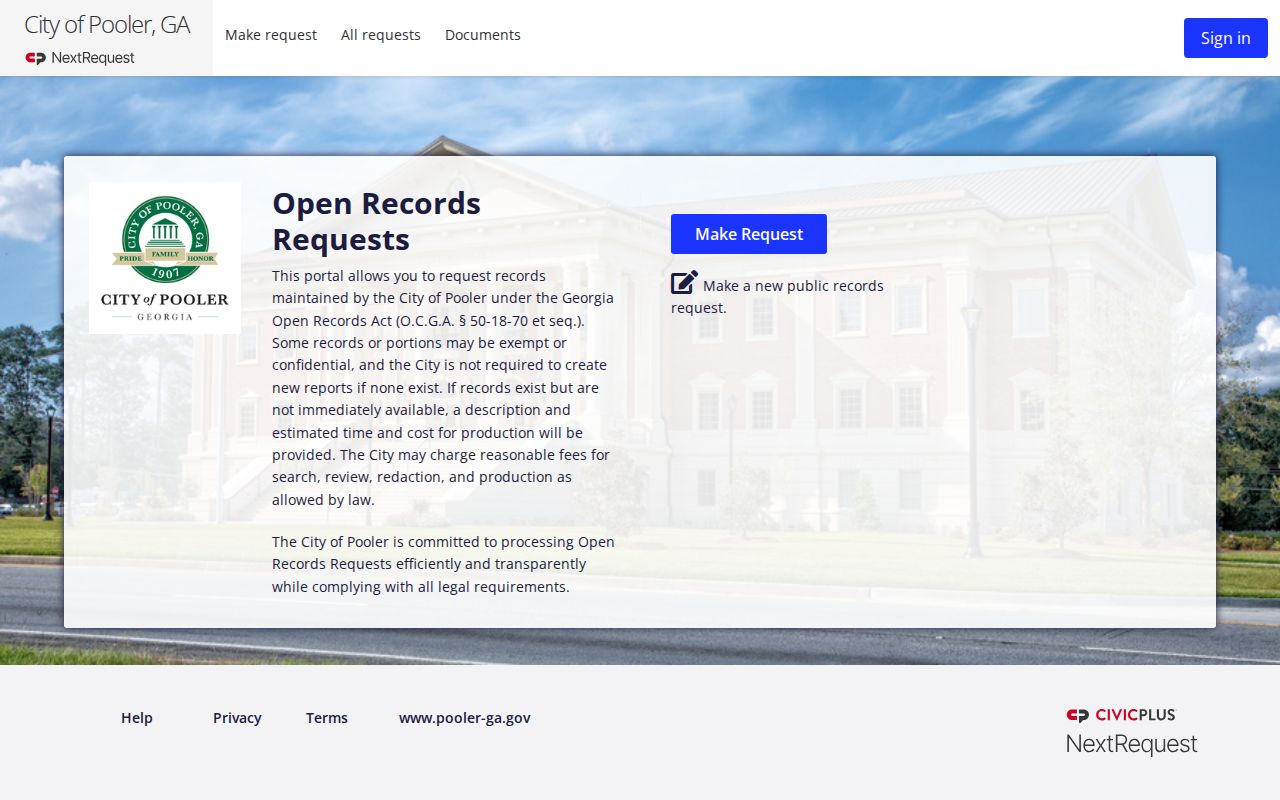
Pooler moved municipal requests to NextRequest in February 2026. Ask for an existing record with a date range, address, permit number, case number, and the department likely to hold it. The Georgia Open Records Act calls for production, or a written timetable and cost estimate, within three business days. It does not require an office to create a new report.
The Pooler request portal supports submission and status tracking.
County requests now use JustFOIA. Direct a request to the government that created or maintains the record.
Pooler City Records Stay Local
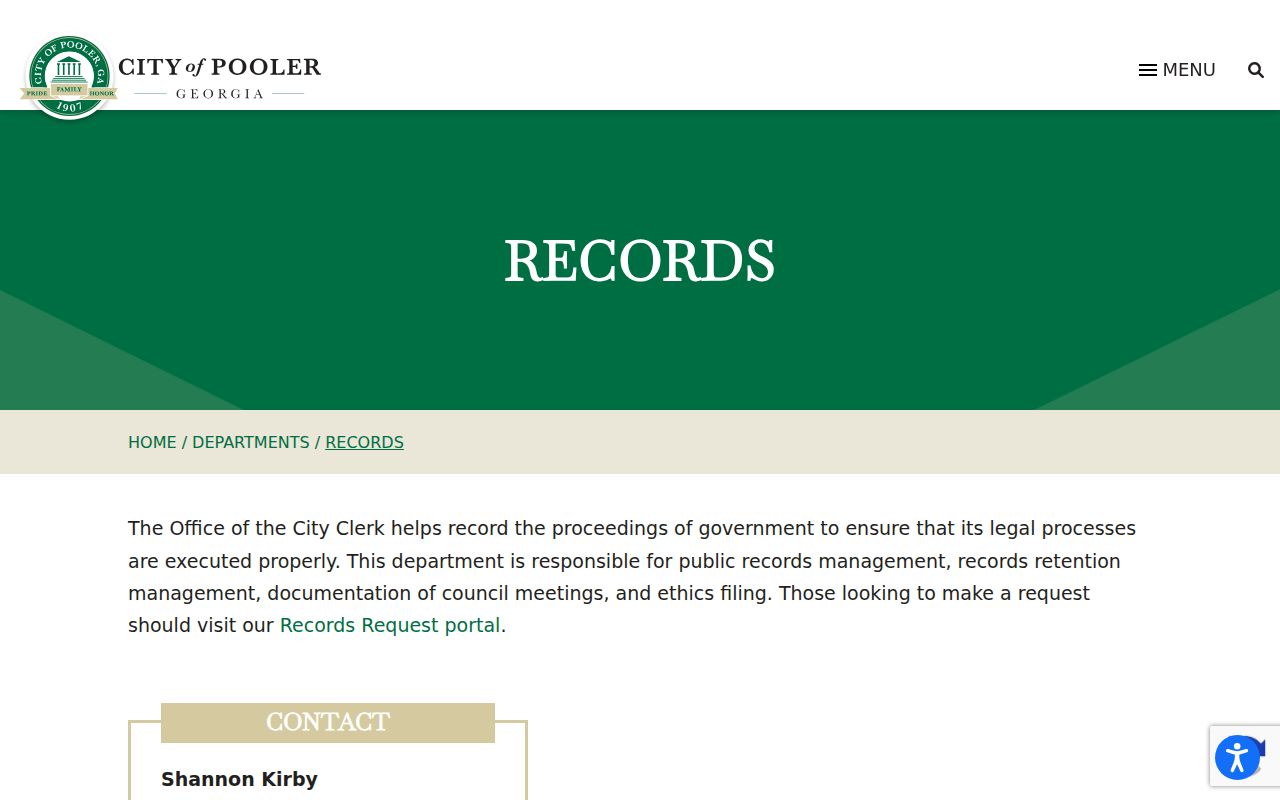
Municipal records answer questions that county indexes cannot. Pooler's clerk can route requests for council minutes, ordinances, contracts, correspondence, and administrative files. Building and Planning maintains applications and inspection material, Code Enforcement keeps address-based cases, and Police provides incident and accident report channels. A permit can date work at a parcel and name an applicant or contractor, but it does not prove who occupied the site.
The official Pooler records department page identifies the deputy city clerk as the records custodian and explains the request route.
Requests work best when they name a department, address, subject, and date span. Broad requests can cost more and take longer to review for lawful redactions.
Georgia Law Sets Pooler Access
The Georgia Open Records Act, O.C.G.A. §50-18-70 et seq., starts from public access to agency records unless a specific exemption applies. Agencies may charge reasonable search, retrieval, redaction, and copying costs, with the first quarter-hour of administrative time free. When an item is withheld, the response should identify the legal basis. Requests should describe records, not ask an office to answer a question or compile a new directory.
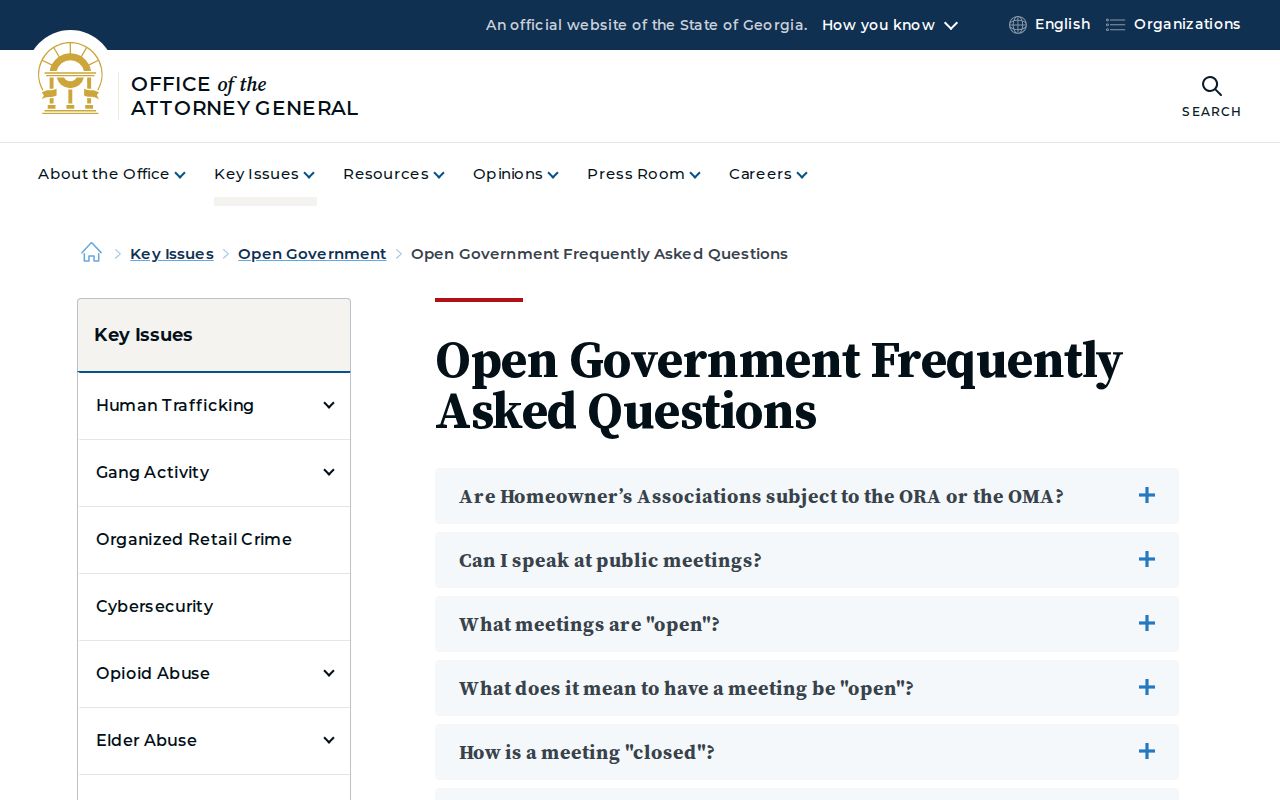
The Georgia Attorney General's open-government guidance explains timing, fees, and common privacy redactions.
Use that law as the fallback after checking the named portal and custodian. A precise request is easier to process and less likely to sweep in exempt personal data.
Pooler Postal Lines Can Mislead
The 31322 mailing area is not the Pooler city boundary. USPS reassigned 2,660 deliveries from 31322 to Savannah 31407 in 2015, so a deed, permit, and later tax card may use different city and ZIP lines without the parcel moving. Search both address forms, then anchor the work to the PIN and legal description.
A postal city, an incorporated city, and a parcel jurisdiction are different facts. Confirm jurisdiction in SAGIS.
Pooler reports about 28,738 residents across roughly 31 square miles, and growth toward the interstate and airport makes boundary checks especially useful.
Pooler Residents in Old Directories
Pooler began as an 1838 railroad settlement and was once called Pooler's Station. That history sends researchers to Savannah and Chatham regional collections rather than a stand-alone local series. Pooler-inclusive Polk volumes have been verified for 1951, 1954, 1955, 1957, 1959, 1961, 1962, and 1963-64. The 1951 abbreviation key uses “P” for Pooler.
The UGA city-directory holdings page describes the broader Georgia collection. A directory entry can preserve a spouse, occupation, employer, and locality. The full collections and reading method appear in the Pooler city directory.
Pooler Privacy Has Firm Lines
Official rolls omit or redact protected information. Driver records are restricted, utility account details are not a public household directory, and Safe at Home can provide a substitute address to eligible survivors. Public-employee home contact details are also exempt. Commercial compilations may mix stale addresses and same-name people, while an official index remains tied to a named custodian and record purpose.
| Source type | Main strength | Main limit |
|---|---|---|
| Official index | Known keeper and record context | Narrow coverage and redactions |
| Commercial compilation | Broad name and address clues | May be old, merged, or wrong |
Use resident records only for lawful personal research. Never stalk, harass, threaten, or expose a protected address.