
Pooler Previous Residents Across the Available Record Eras
The age of the address determines the first useful source. Current and recent properties begin with the Chatham parcel card and recorded deed. Mid-century occupant work benefits from regional directories and the public census. Earlier work often moves into deed books, plats, newspapers, probate, and archival collections because Pooler began as a railroad settlement within a much older county record system.
| Source | Years covered | Where held | Evidence it adds |
|---|---|---|---|
| Assessor card and digest | Current and recent assessments; archive start unstated | Chatham Board of Assessors | Owner, PIN, situs, mailing address, sale reference |
| Deed index and books | Online cutoff unstated; older books preserved | GSCCCA and Garden City Records Center | Owners, parties, dates, book/page, legal description |
| Savannah and Chatham directories | Regional run mostly 1848-2003; Pooler inclusion varies | GHS, DLG, UGA, Live Oak | Listed adults, spouses, occupations, address clues |
| Federal census | Released through 1950 | NARA and library databases | Household members, relationships, ages, birthplace |
| Pooler permits | Current portal; historic start unstated | City portal and records custodian | Work, applicant, contractor, dates, valuation |
| Probate and obituaries | Varies by court series and newspaper | Chatham Probate Court and archives | Death, heirs, fiduciaries, relationship leads |
For a new subdivision, start with the parcel and deed. For a mid-century address, bracket the year with directories and census. For an early Pooler or Pooler's Station clue, expect rural Chatham and Savannah-oriented sources.
Begin a Pooler Previous Residents Search with Today's Parcel
Enter the situs address in SAGIS, select the parcel, and save its PIN, municipality, subdivision, lot, and legal description. Then open the assessor card. Record the current owner, separate owner mailing address, sale date, deed book and page, and any homestead flag. The mailing address is only the destination for tax notices. It may identify an absentee owner and does not prove where that owner or anyone else lives.
The PIN and legal description are the bridge between present and past residents. Street text can change, a subdivision can be annexed, and a postal city can shift. The parcel identity is usually the stronger link across those breaks.
Trace Pooler Owners Backward Through the Chatham Deed Chain
Deeds establish recorded title, not every occupant, but they create the chronological frame for previous residents. Work backward from the current acquisition rather than guessing at old surnames.
- Copy the current owner, PIN, legal description, sale reference, and book/page from the assessor record.
- Search the current owner as grantee in the GSCCCA real-estate index and open or order the acquisition deed.
- Identify the grantor, then search that seller as a grantee in an earlier transaction.
- Repeat while the electronic index supports the series, checking names, dates, instrument types, and legal descriptions.
- At the online limit, take exact book/page citations and name variants to the Garden City Records Center.
- Grantor and grantee
- The grantor transfers an interest; the grantee receives it.
- Chain of title
- The linked sequence of recorded transfers for the same legal parcel.
- Legal description
- The lot, subdivision, boundary, or land description that identifies property more reliably than an old street line.
- Enumeration district
- The census taker's assigned geographic area, useful when an older address is absent or changed.
The Georgia deed-index guide explains the statewide search system used for this chain.
Use an index result as a route to the instrument, not as a substitute for reading the deed itself.
Carry Pooler Book and Page Clues to the Garden City Records Center
The Chatham Clerk does not state one exact earliest online year for every real-estate series. That uncertainty is a reason to use the offline archive, not to declare the chain finished. The Garden City Records Center holds older deed books, plats, maps, microfilm, and court files. It also provides public terminals, microfilm scanners, and printers, with older materials available by appointment.
The Chatham Clerk's Real Estate Recording Division describes this records path.
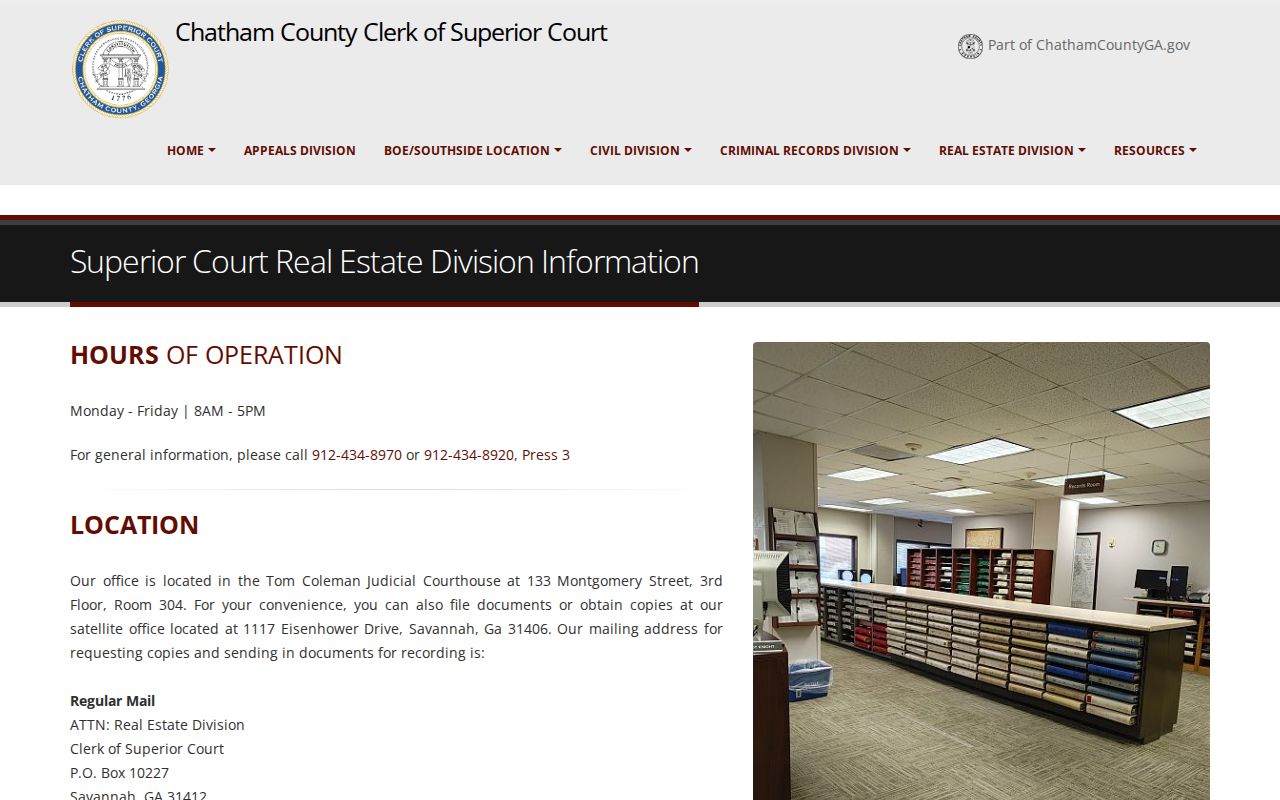
Arrive with exact names, approximate dates, PIN, subdivision and lot, and every known book/page citation. Those details let staff move from an electronic reference to the correct physical or filmed volume.
Separate Pooler Past Owners from the People Who Lived There
A title chain answers who held a legal interest. It does not supply a complete resident list. A renter may never appear in a deed. A trust or company can hold title. A spouse, child, lodger, or relative may live at the address without appearing on the tax card. To identify previous residents, compare owner evidence with sources built around households and street listings.
Homestead status can support owner occupancy for an assessment period, but it still cannot name all occupants. Likewise, a permit applicant may be an owner, contractor, or agent. Label each finding by what the source actually proves.
Pair Pooler Directories with Census Years to Find Previous Residents
Pooler often appears within Savannah and Chatham directories. Verified Pooler-inclusive Polk volumes include 1951, 1954, 1955, 1957, 1959, 1961, 1962, and 1963-64. A directory can show a listed adult, spouse, occupation, locality, and sometimes a street listing. The newest public federal census in 2026 is 1950 under the 72-year rule.
- Choose the directory edition closest to the deed, family event, or known occupancy date.
- Copy the entry exactly, including spouse, address, occupation, employer, and abbreviation.
- Read the editions before and after it to bracket arrival, departure, or a changed address.
- Compare the 1940 or 1950 entry with the matching census household and enumeration district.
- Use deeds for title, then probate and vital records for relationships rather than merging people on name alone.
The Pooler directory-book page explains the regional collections and how abbreviations work. Omission from one edition is not proof of absence because coverage of women, minors, lodgers, newcomers, and rural households was uneven.
Georgia Archives Extends the Pooler Address Trail Beyond Street Numbers
Chatham County was created in 1777, long before Pooler emerged in 1838. Very early land and family evidence may therefore use rural district, plat, will, warrant, or railroad language rather than a modern house number. Georgia Archives and its Virtual Vault provide state and county microfilm, colonial wills and plats, warrants, maps, and digitized name indexes.
The Georgia Archives collections provide the statewide archival route for those older clues.
Search Pooler, Pooler's Station, Chatham rural districts, Central of Georgia, and surname variants. A modern street address may need to be translated through a plat and deed before an archival name becomes meaningful.
Bridge Pooler's 2015 Postal Shift When an Address Appears to Move
USPS moved 2,660 deliveries from Pooler 31322 to Savannah 31407 in 2015. A prior resident may therefore appear under a Pooler last line in one record and Savannah in another without moving. Postal Pooler and incorporated Pooler are not identical, especially near growth corridors and city edges.
Search both postal forms, then compare the PIN, legal description, subdivision, lot, deed book/page, and chronology. This is one of the clearest cases where a stable parcel identifier beats a street-and-ZIP string.
Date Changes at a Pooler Address with Plats, Permits, and Maps
Subdivision plats connect a modern address to its legal lot and can explain when a street came into the recorded landscape. Pooler permits may add applications, contractors, work descriptions, inspection dates, and valuations. The current CivicGov portal is account-gated, and research did not verify a public historic browse or its start year, so an open-records request is the fallback for existing city files.
Georgia Historical Society house-history resources include more than 800 cataloged maps, title-insurance property records from 1922-1979, and a Chatham property collection spanning the 1730s-1920s. Its verified Sanborn editions cover Savannah, but no Pooler-specific Sanborn sheet was located. Do not claim fire-map coverage for a Pooler property unless the catalog and sheet confirm it.
The Georgia Historical Society research center helps identify relevant regional sources.
Map and permit dates establish changes to land or structures. They do not by themselves establish who occupied the property.
Close a Pooler Previous Residents Trail with Probate and Obituaries
When a listed person disappears from directories or title passes through an estate, search obituaries, cemetery sources, legal notices, and Chatham Probate Court. Probate files may name a decedent, heirs, fiduciaries, dates, and property-related acts. Savannah newspapers often carry Pooler notices, and the Savannah Morning News serves as the legal organ for Chatham probate notices.
The court's Probate Court information gives the official office and jurisdiction context.
Use probate to confirm relationships and estate actions, and an obituary as a lead that should be checked against official death or court evidence.
Use Pooler Previous Residents Records for Lawful House History
A careful previous residents project preserves uncertainty. It distinguishes ownership from occupancy, a postal city from municipal jurisdiction, and an index from the underlying record. Georgia records also redact protected identifiers, and Safe at Home can replace a qualifying survivor's residence with a substitute mailing address.
Lawful use. Research past residents for house or family history; never use the trail to track, threaten, or harass a living person.